- Indonesia’s Leading English News Website, Direct Daily from the Island of Bali.


Letters to the Editor: To the People of Indonesia
Letters to the Editor: To the People of Indonesia
My Dear Friends,
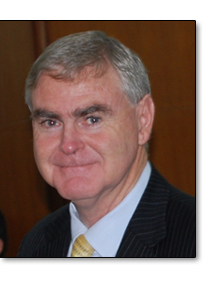
I am writing to you as a friend of Indonesia and as an Australian who has visited Indonesia on many occasions and who proudly has many Indonesian friends. By way of introduction I am a former member of the Australian Federal Police (AFP) with over 31 years of investigative experience. During my service in the AFP I managed or conducted investigations into drug trafficking, money laundering, fraud and corruption and to recover the proceeds of crime derived from those offences.
As an AFP member I was not involved in the investigation of Andrew Chan and Myuran Sukumaran and their associates however, I have managed other investigations that led to the arrest and prosecution of drug traffickers conveying drugs from Indonesia to Australia. I have visited Indonesia on many occasions to conduct financial investigation training programs for Indonesian law enforcement agencies including the Indonesian National Police (INP). I was personally uplifted by the experience to teach in Indonesia and from what I learned from my Indonesian colleagues.
In relation to Chan and Sukumaran I am appealing to you all for assistance. There is no doubt that Chan and Sukumaran deserve to be punished. Trafficking in heroin is a serious matter. And while I acknowledge that their fate is a matter for the Indonesian people, I do not believe they should be executed for their crime. The President of Indonesia is correct and courageous in taking a stand against drug trafficking and bringing it to world attention. It is a scourge not just in Indonesia but right throughout the world. The Indonesian President is searching for a solution to the serious drug problem in Indonesia. So now is the time to talk about practical solutions. And given it is a common problem amongst nations, particularly in Australia and Indonesia, our two countries should talk together about finding solutions.
The investigation of Chan and Sukumaran and their associates is an example of what can be achieved in the fight against drug trafficking when nations cooperate with each other. The drug operation was exposed due to intelligence being provided to Indonesia by the Australian Federal Police. It is unfortunate that the investigation did not result in the dismantling of the offshore crime group responsible for the manufacture and supply of the heroin or the persons involved in the laundering of money derived from the supply of the heroin.
However, while Chan and Sukumaran are still alive, the option to pursue those involved in the supply of the heroin and the laundering of any money involved in the supply of that heroin remains viable. To enable Indonesian authorities and Australian authorities to prosecute those behind the supply of the heroin, Chan and Sukumaran would be required to provide information into other persons involved and give evidence against them. The heroin Chan & Sukumaran were attempting to export from Indonesia was destined for Australia consequently Australia could equally claim jurisdiction in the prosecution of all those involved including those not yet convicted of the crime.
To investigate higher level drug traffickers who are based offshore from Indonesia and to prove money laundering offences against the same organisers or any professional money launderers involved, Chan and Sukumaran (and the other people facing execution) need to be available to give evidence in Indonesia or any other jurisdiction in which those involved are subsequently prosecuted. Evidence cannot be sourced from dead witnesses. And if Chan and Sukumaran and any of the other people on death row are executed any potential prosecution against others for drug trafficking or money laundering connected to their matters would probably be unsuccessful.
Executing drug couriers and lower level organisers will only result in the cutting off of the tentacles of organised crime. The drug couriers will keep coming to Indonesia. And Indonesia will keep executing them. And more couriers will come, because there is no shortage of desperate people in the world who are willing to risk their life or their freedom to work for organised crime. We have to strike at the heads of organised crime and that means attacking them offshore.
Removal of the death penalty in drug cases gives police and prosecutors room to manoeuvre with any drug suspect. A chance of a life or a reduced sentence in return for cooperation would enable Indonesia (and any country) to break the control the crime group has over the people they use. It would also increase the costs of offshore drug groups wanting to supply narcotics to the Indonesian market and force them into using other methods which might involve a higher risk of detection by law enforcement authorities.
We must therefore be careful that we do not embark on a strategy that has the potential to divide us and fracture our efforts. To that end, I am concerned from a law enforcement perspective that if the executions of Chan and Sukumaran proceed (and the execution of the other persons convicted of drug trafficking in Indonesia) it might have an impact on the exchange of intelligence between international police agencies involved in combating the international drug trafficking trade. If countries that do not have the death penalty restrict the supply of intelligence to countries that impose the death penalty then the only winner will be transnational organised crime groups. All nations will suffer, including Indonesia and Australia. A key aim of any strategy to combat drug trafficking should be the enhancement of cooperation amongst nations and not the implementation of measures that have the potential to divide us. This is what international crime syndicates hope for as they thrive in an international environment that is weak in international law enforcement cooperation.
Any restriction on the sharing of intelligence relating to drug trafficking could have an impact on the investigation of other crimes for example terrorism. Some terror groups finance their operations by drug trafficking (for example the Madrid train bombings in Spain) and the two crime types are difficult to separate from an intelligence perspective. It might not be known until it is too late that the people involved in drug trafficking are also terrorists.
Only through cooperation such as that which occurred in the Chan and Sukumaran investigation will countries be able to successfully combat international drug trafficking. I therefore propose the following international anti-drug strategy to be considered by the Indonesian people and the Indonesian Government as a partial solution to Indonesia’s drug problem:
1. Indonesia and Australia to form a joint drug task force in Indonesia tasked to combat international drug trafficking. The task force would be lead by the INP and focus on the “upstream” disruption of the supply chains of international drug syndicates operating in South East Asia. This will involve working with international partner agencies to identify and bring to justice offshore based crime groups involved in international drug trafficking to Indonesia and to Australia. The first cases to be pursued by the task force should be the crime group behind the supply of the heroin to Chan and Sukumaran and the supply of narcotics imported by the other convicted drug traffickers held in Indonesia.
2. Australia should assist the INP to establish or enhance its police liaison network throughout Asia using the successful AFP police liaison network as a model. An extensive INP liaison network throughout Asia and other parts of the world would enhance Indonesia’s capacity to fight transnational organised crime offshore.
3. Indonesia and Australia should establish a joint money laundering investigation team to pursue offshore those behind the laundering of drug money and money from other serious crimes committed in Indonesia.
4. Indonesia and Australia should establish a joint asset recovery team to trace and seize assets derived from drug trafficking and other serious crimes, particularly assets hidden offshore. The funds obtained from successful forfeiture action should used to fund drug rehabilitation and education programs in Indonesia.
5. Indonesia and Australia as G20 members should jointly play a major role in supporting and enhancing the Asset Recovery Interagency Network – Asia Pacific, an informal network of police and legal experts cooperating in all aspects of tackling the proceeds of crime in the Asia-Pacific region.
6. Indonesia and Australia through the G20 Group should encourage all countries to join the Egmont Group of Financial Intelligence Units and to work together to support countries seeking membership by providing technical advice and training.
7. Australia should provide assistance and training in the implementation or expansion of container x-ray equipment at major Indonesian seaports. Modern container examination techniques significantly increase the chances of detecting narcotics at the border and create a significant deterrent and higher costs to those groups involved in narcotics trafficking.
8. Drug couriers, their handlers and other criminals including terrorists often travel on fake passports. Indonesia and Australia should collaborate on improving Indonesia’s ability to detect false passports including the use of photo recognition technology that has been implemented in Australia.
9. Indonesia and Australia to share information and technical knowledge about drug rehabilitation programs, drug treatment programs, needle exchange programs, prisoner rehabilitation programs and DNA drug profiling.
The strategy I propose is not an approach upon Indonesia’s sovereignty. It is transnational organised crime that challenges the sovereignty and security of Indonesia. Australia is not a threat. Australia is a friend. Our common enemy are the international drug groups. And this threat will only increase as the power and influence of transnational organised crime expands and new and more dangerous illicit drugs are developed and marketed in Indonesia and Australia. United in the fight against organised crime, Indonesia and Australia can defeat drug trafficking or significantly reduce its harm not only in our two countries but within the Asia-Pacific region, with Indonesia playing a major role.
As a friend I respectively request that you consider the above strategy. I then ask that you raise the strategy with your parliamentary representative and with the Office of President. And I ask you to urge Indonesian leaders to explore all of the above options with the Australian Government.
The views expressed in this letter are solely mine. I do not speak for the Australian Government as I am not in a position of authority to do so. I speak as a good friend.
Together we can fight the drug syndicates and defeat them. Together by partnering with other law enforcement agencies we can take the fight into other countries and bring to justice those who seek to destroy our way of life. But we must do it together to have any chance of success.
Your Australian Friend
Pak Chris Douglas, APM
Malkara Consulting
Perth, Western Australia
7 Comments
Wonderful letter, thank you Mr Douglas
I’m a bit tired of my tax dollars giving a voice to you government employed do-gooders, concerned about the welfare of criminals. Your delicate, caring approach to murderers and criminals would have served you better in a career in child care rather than the Australian federal police.
When a member of your family becomes addicted, and then suffers a lifetime of mental illness from that addiction, would your view change?
When your child is maimed because some stoner decided to operate a vehicle and caused an accident, would your view change?
When your house is broken into and your family heirlooms are stolen and you no longer feel safe, would your view change?
I consider it not unreasonable, if Indonesia was to torture Sukumaren and Chan, to release the names of their bosses. I applaud the publicity Indonesia is generating by stringing these criminals along, and make no mistake, they ARE murdering, society destroying, criminals. It takes a special kind of stupid not to notice information of the consequences of running drugs through Indonesia.
My condolences, in advance, to the families of these two thugs. Their deaths wont be in vain, countless other lives and social problems will have been saved from the drugs that didn’t make it on the streets.
When is the world going to learn… Making drugs illegal just bids up their price to the point of attracting individuals to the large illicit profits for trafficking.
There’s nothing special about drugs other than the fact they are a product wanted by a lot of people. The suppliers aren’t all that interested in the specifics of the product, just that it’s in great demand and the profits for providing it are *huge*.
There are always going to be addicts. The question is one of, “What’s the best way to minimize the collateral damage of the compounds?”
Make no mistake, the government *likes* illegal drugs as much as the traffickers; budgets remain high, laws get passed providing more power and personnel to the fight, politicians get air time talking tough.
The illegal drug trade taints all including those attempting to eradicate it.
Decriminalize and instantly the price comes down removing the extreme financial incentive black markets provide.
There’s the way the world is and the way we want to see the world. Confuse the two and problems only increase.
Thank you Mr Douglas, you propose a very in-depth, rational way forward.
Thank you Mr Douglas, for sharing such a well written letter. I hope that the President sees fit to show mercy, and allow Andrew Chan and Myuran Sukumaran to continue their work within the prison system. They have proved themselves as useful and productive human beings. #IStandForMercy #ampuni
People in glass houses shouldn’t throw stones. If you were such a talented and awesome investigative AFP Officer how come it took so long to find out what Mark Standen (Former Ass Director of the NSW Crime Commission) was doing under your noses for years. You do understand why Mick Keelty & AFP served up the Bali9 on a plate to Indonesia? The timing cemented Schapelle’s fate and promoted the false perception of guilt. It’s time to report the TRUTH. AFP have corrupt officers & they know Schapelle is innocent. Bali9 swept everyone’s gaze from Australia’s backyard and all eyes are now on Indonesia. SUCKED IN! JM
Chris Douglas..You know Schapelle Corby Is Innocent..You know about the Australian Airport Drug corruption..AFP drug smuggler officer..MS..in prison..Give this Innocent Girl back her life and help with The Truth..Please.!