- Indonesia’s Leading English News Website, Direct Daily from the Island of Bali.


Bali Traffic Woes Catch UK Attention
Bali Traffic Woes Catch UK Attention
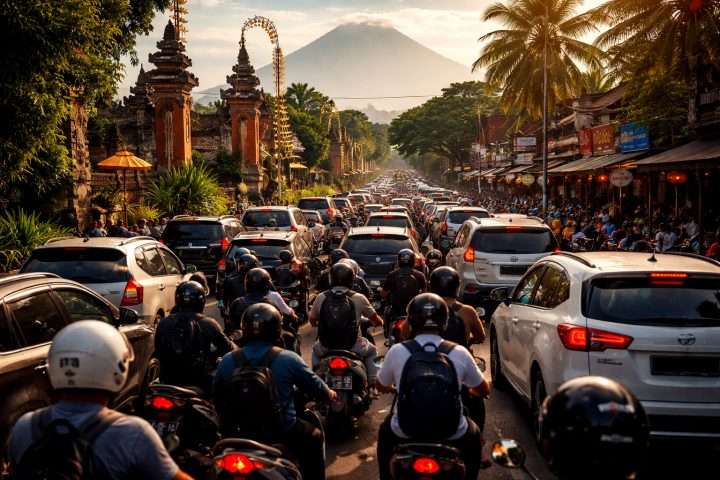
Bali traffic congestion continues to intensify as tourism and daily mobility collide.
DENPASAR — Bali traffic congestion, which has worsened alongside the island’s booming tourism and urban growth, is no longer seen as a purely local issue. The problem is now drawing international attention, with the United Kingdom expressing interest in supporting Bali through technology-driven transport solutions.
The opportunity emerged during a meeting between Bali Governor Wayan Koster and UK Deputy Ambassador to Indonesia Matthew Downing in Denpasar on Friday (Jan 30). Traffic congestion was raised as one of the key challenges amid Bali’s rising tourism activity and urban mobility pressure.
The UK signaled its readiness to assist Bali through the Future Cities Infrastructure Programme, offering technical support in transport planning and feasibility studies. The proposed cooperation focuses on data-driven approaches rather than immediate physical construction, emphasizing smarter planning as a foundation for long-term solutions.
Under the programme, UK-based transport firms would support Bali with digital platforms and a virtual replica of the island, integrating data on buildings, road networks, and tourist destinations. This system would allow authorities to monitor traffic flows in real time, identify congestion hotspots, and simulate the potential impact of new infrastructure before implementation.
Downing noted that the steady rise in British tourist arrivals to Bali adds urgency to improving transport systems. Around 270,000 UK tourists visited Bali in 2025, with projections reaching 350,000 by 2026. He said efficient and reliable transport plays a critical role in maintaining Bali’s appeal as a global destination.
While discussions also covered cooperation in waste management, education, and the economy, traffic congestion stood out as one of the most pressing and tangible issues. The UK’s interest reflects a broader view that Bali’s mobility challenges mirror those faced by major tourism-driven regions worldwide.
The meeting underscored a shift in perspective: Bali’s traffic problem is no longer just a domestic concern, but a shared urban challenge—one that may increasingly be addressed through international collaboration and technology-based planning.