- Indonesia’s Leading English News Website, Direct Daily from the Island of Bali.


Elephant Abuse Allegations in Bali Spark Response from PETA and Tourism Operators
Elephant Abuse Allegations in Bali Spark Response from PETA and Tourism Operators
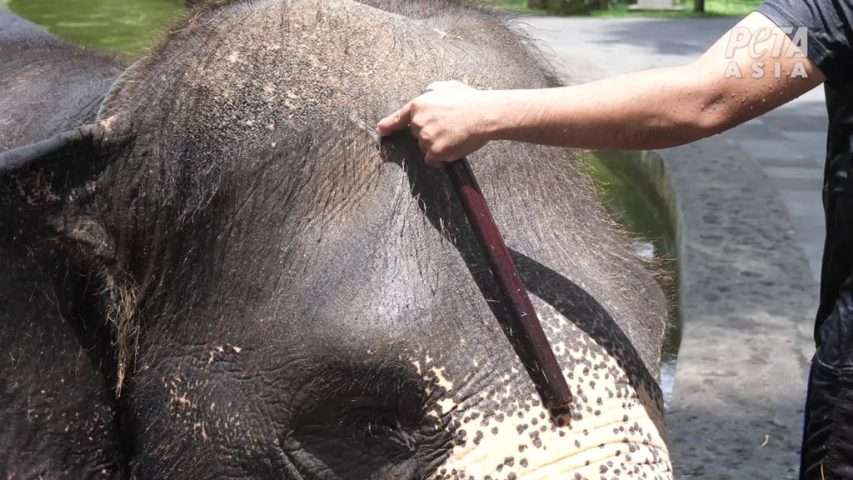
Bullhook used by a mahout while handling an elephant. (Courtesy of PETA Australia)
GIANYAR, Bali – Concerns over elephant abuse allegations in Bali have intensified after People for the Ethical Treatment of Animals (PETA) Australia accused three tourist attractions of keeping elephants in conditions that separate them from their natural habitat. PETA said tourists were being “misled” into paying for what it described as exploitation of protected wildlife.
PETA Australia’s Senior Campaigns Adviser, Mimi Bekhechi, claimed these destinations promote narratives of “rescue” while still forcing elephants to interact with visitors. “PETA urges tourists to do their research and avoid destinations with ‘rescue’ claims that still force elephants to interact with tourists,” Mimi said, as quoted from peta.org.au, Thursday (11/12/2025).
According to Mimi, elephants are highly social animals that live in herds led by a matriarch, where members protect one another and share responsibilities in raising calves. In tourism operations, however, mothers are allegedly separated from their babies at a very early age. Adult elephants, she added, are kept in restrictive conditions, chained when not working, and continually threatened with physical punishment and psychological pressure.
In its report—supported by covert one-minute video footage—PETA highlights the use of ankusa or bullhooks, metal-tipped rods with a sharp, curved end. The footage shows mahouts directing the pointed tip at the elephants’ heads while riding them. PETA states that this tool causes pain and injuries to the animals.
One of the attractions named by PETA, Mason Elephant Park & Lodge, strongly denied the allegations. The facility claims to be the only elephant venue in Indonesia fully audited and approved by relevant authorities. Management said they meet all welfare standards required for elephants in captivity.
The management added that their Sumatran elephants are cared for by experienced mahouts, provided with sufficient food variety, supplemental vitamins, and routine veterinary checks. They also defended the elephant-riding activities—both bareback and with lightweight wooden saddles—arguing that the rides serve as necessary physical exercise that supports muscle development, bone density, foot health, digestion, and overall well-being.
According to Mason, only a portion of the elephants participate in rides, and their working hours are limited. They typically walk less than 5–8 kilometers per day—significantly lower than the 30 kilometers elephants may walk in the wild. The animals also follow a rotating schedule that includes days off and sick leave.
“The saddles are equipped with thick padding and do not touch the elephant’s skin. The combined weight of the saddle and rider is roughly 7% of the elephant’s body weight—lighter than a horse saddle, which reaches about 17% of a horse’s body weight,” the representative explained.
As of now, the Bali Natural Resources Conservation Center (BKSDA) has not issued an official statement regarding the allegations. “We will review it first. Thank you,” said BKSDA Bali Head, Ratna Hendratmoko, in a brief response.