- Indonesia’s Leading English News Website, Direct Daily from the Island of Bali.


Bali Farmland Conversion Triggers Government Warning
Bali Farmland Conversion Triggers Government Warning
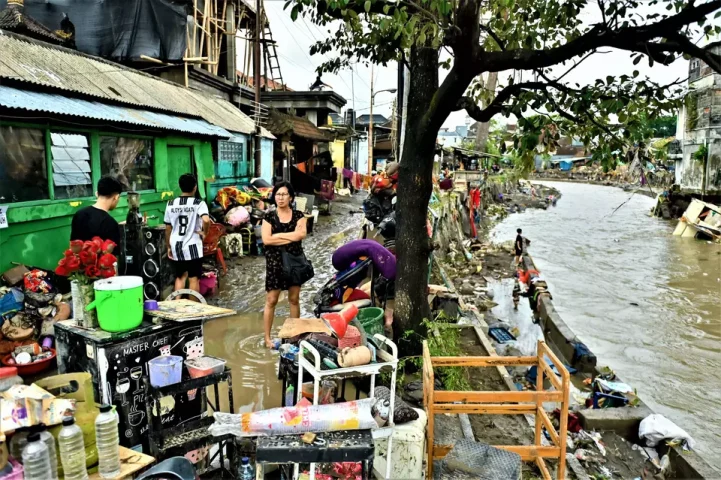
Residents during flooding in Denpasar on Sept. 10, 2025.
BADUNG, Bali – Bali farmland conversion has reached an alarming level, prompting Indonesia’s Agrarian Affairs and Spatial Planning Minister/National Land Agency Chief Nusron Wahid to endorse the island’s move to stop turning productive rice fields into commercial zones. He warned that Bali’s protected agricultural areas have fallen far below national spatial-planning standards.
Speaking in Denpasar on Wednesday, Nusron said Bali’s Sustainable Agricultural Land (LP2B) now represents only 62 percent of the island’s total rice-field area, significantly lower than the 87 percent mandated by national regulations. Under the broader Sustainable Food Agriculture Zones (KP2B), Bali stands at 83 percent, still short of the 90 percent requirement.
He urged regional leaders to begin designating new farmland to replace rice fields already lost to tourism-driven expansion. “Before stopping all land conversion, we must coordinate with regents and mayors to find solutions, including identifying new land. LP2B in Bali has not reached the required threshold,” he said.
Nusron asked the governor to map out around 6,000 hectares of new agricultural land—4,000 hectares to replace converted fields and another 2,000 hectares to meet minimum national standards. Failing to restore the required coverage, he warned, would put Bali in violation of the 2009 Sustainable Agricultural Land Law, which carries penalties of up to five years in prison for illegal conversion of protected farmland.
Creating new rice fields, he added, would allow the government to legalize past land-use changes while strengthening Bali’s long-term food security. He emphasized the need to balance agriculture with tourism and housing demands and encouraged residents to build homes on non-productive land or adopt vertical housing models.
His remarks follow heightened scrutiny of Bali’s land-use practices after floods and landslides in September killed 17 people. Environment Minister Hanif Faisol Nurofiq linked the disaster to poor waste management and unchecked construction of hotels, villas, cottages, and housing on former rice fields and hillsides. The rapid loss of green space, he said, has undermined the island’s resilience to extreme rainfall.
Government data shows Bali has lost about 400 hectares of forest to commercial and residential development since 2015. In response to the deadly floods, Governor I Wayan Koster announced a freeze on permits for converting productive farmland into commercial zones starting in 2025, with all development plans to be reviewed to ensure no new tourism projects encroach on agricultural land.