- Indonesia’s Leading English News Website, Direct Daily from the Island of Bali.


Indonesia’s Marine Tourism Industry Shows Strong Growth Potential
Indonesia’s Marine Tourism Industry Shows Strong Growth Potential
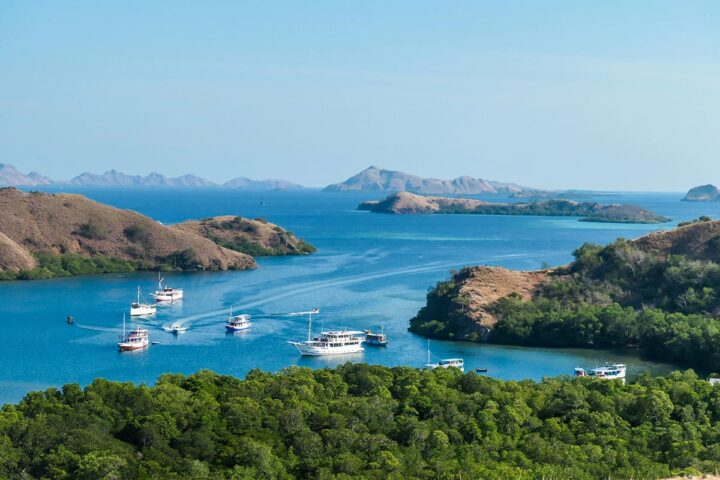
An aerial view of Komodo Island, Indonesia, with boats anchored along the bay and surrounding islands visible in the distance.
JAKARTA, Indonesia — Indonesia’s marine tourism industry is showing strong growth potential as international visitor numbers rise, yacht activity increases and the government looks to expand infrastructure across some of the country’s best-known coastal destinations.
Tourism Minister Widiyanti Putri Wardhana said Indonesia recorded 127 superyacht arrivals during 2025–2026, the second-highest figure in the Asia-Pacific region after Australia. The government is now positioning marine tourism, particularly yacht tourism, as a key area for future growth.
The domestic yacht tourism market is projected to grow from around US$261.9 million in 2025 to US$449.1 million by 2033, equivalent to an annual growth rate of about 7 percent. Widiyanti said Indonesia’s geography and marine biodiversity provide a strong foundation for developing higher-value tourism products linked to the sea.
Indonesia welcomed 15.39 million international visitors in 2025, according to Statistics Indonesia. Bali’s Ngurah Rai Airport accounted for more than 6.9 million of those arrivals, underlining the continuing importance of Bali as a gateway for international tourism.
Marine tourism potential extends well beyond Bali. In western Indonesia, destinations include the Riau Islands, Belitung, Ujung Kulon and the Thousand Islands, while Bali, Lombok and the Gili islands form part of a major tourism corridor further east.
Labuan Bajo has also become an increasingly important marine tourism gateway, while destinations such as Wakatobi, Banda, Morotai and Raja Ampat draw visitors for diving, snorkelling and other ocean-based activities.
Despite the growth potential, Indonesia still faces a significant infrastructure gap.
The country currently has 29 designated yacht entry and exit ports, with 19 providing customs or duty-free entry arrangements. However, Indonesia has only 10 marinas with a combined 336 berths.
That capacity remains relatively small compared with neighbouring destinations. Singapore has more than 1,200 berths, while Malaysia and Thailand each have more than 1,400, according to figures cited by the Tourism Ministry.
The government sees that gap as both a challenge and an investment opportunity. New marinas, additional berthing capacity and improved services for yachts are expected to play an important role if Indonesia is to capture a larger share of the regional marine tourism market.
Widiyanti said the aim is not simply to build more marinas, but to create a broader tourism ecosystem involving local businesses, tour operators, transport providers, hospitality companies and communities.
The government is also seeking international cooperation to develop marinas to global standards in strategic destinations, particularly in areas where tourism demand is growing but marine infrastructure remains limited.
For destinations such as Bali, Lombok and Labuan Bajo, stronger marine connectivity could open opportunities for longer yacht itineraries and higher-spending visitors, while also creating new demand for local tourism services.
Indonesia’s challenge will be turning its extensive coastline and globally recognised marine destinations into a tourism network supported by sufficient infrastructure, services and sustainable management as the market continues to expand.