- Indonesia’s Leading English News Website, Direct Daily from the Island of Bali.


Why Are Hundreds of Bali Hotels and Villas Being Listed for Sale?
Why Are Hundreds of Bali Hotels and Villas Being Listed for Sale?
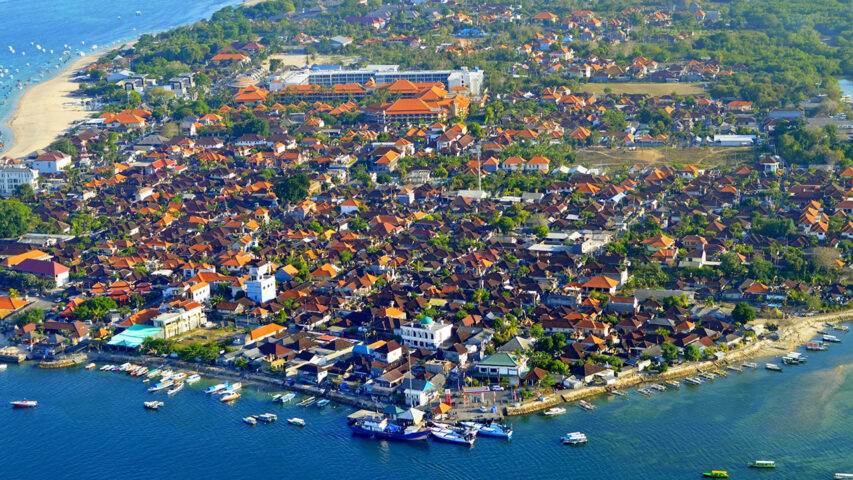
Aerial view of Bali’s coastal landscape and tourism development. (Photo: Unsplash)
Hundreds of hotels and villas appearing in online property listings across Bali have inevitably raised a question: if tourism is doing well, why are so many accommodation businesses apparently being put up for sale?
Local media reports have identified 244 online advertisements for hotels and villas offered for sale, with properties spread across major tourism areas including Kuta, Seminyak, Canggu, Ubud, Nusa Dua, Pecatu and Sanur.
But the number needs context.
The 244 figure comes from online advertisements rather than an official government count. A listing does not necessarily mean a property is distressed, nor does it prove that 244 individual businesses are failing or even actively seeking buyers. Some properties may appear in multiple advertisements, while some owners may simply be testing the market.
Bali Governor Wayan Koster has already instructed tourism and licensing authorities to gather official data on the properties being advertised.
Koster has rejected suggestions that the listings are evidence of a tourism downturn, pointing instead to individual business circumstances and noting that visitor arrivals remain strong.
On that point, the numbers support him.
Bali recorded 697,809 direct foreign tourist arrivals in July 2026, up 15.34 percent from 605,013 in June, according to Statistics Indonesia’s Bali office.
Yet the same data reveal something worth examining more closely.
The occupancy rate at star-rated hotels stood at 67.29 percent in July. While that was higher than June’s 64.87 percent, it was slightly below the 67.75 percent recorded in July 2025.
In other words, more visitors do not automatically translate into proportionately stronger hotel performance.
That is where the debate over accommodation supply becomes more important than the number of properties advertised for sale.
Tjokorda Oka Artha Ardhana Sukawati, chairman of the Bali chapter of the Indonesian Hotel and Restaurant Association, or PHRI, says the buying and selling of hotels is normal in the property business. Some owners, he says, put assets on the market simply to test their value and may ultimately decide not to sell.
But he also says the apparent increase in listings deserves closer scrutiny.
According to PHRI, accommodation supply and tourism demand are no longer growing at the same pace in some parts of Bali. Kuta is among the areas facing pressure as demand has shifted while accommodation supply continues to expand.
The situation is not uniform across the island.
A hotel in Sanur, for example, may remain highly attractive to investors because occupancy and market demand are strong. Other areas may face much tougher competition as new hotels, villas and short-term rentals continue to enter an already crowded market.
This distinction matters.
Bali should not be treated as one homogeneous tourism market. Canggu, Kuta, Seminyak, Ubud, Sanur, Jimbaran and Uluwatu each attract different visitors, operate at different price points and face different levels of accommodation supply.
The growing number of properties appearing for sale may therefore say less about Bali tourism as a whole than about how intensely competitive certain parts of the island have become.
PHRI has gone further, arguing that the gap between supply and demand in South Bali has become wide enough to justify a moratorium on additional accommodation development.
That concern deserves attention.
When accommodation supply grows faster than demand, operators lose pricing power. Hotels and villas compete harder for the same guests, room rates come under pressure and businesses have less room to absorb rising operating costs or invest in service quality.
Meanwhile, villa operators are facing their own reset.
The Bali Villa Rental and Management Association says property sales should not automatically be interpreted as failed investments. Owners may sell because they need liquidity, are restructuring their businesses, ending partnerships, changing investment strategies or simply taking profits and moving capital elsewhere.
But the association also points to a changing investment environment.
The era in which investors could build a villa, assume consistently high occupancy and expect a rapid return is becoming harder to rely on. Legal requirements, taxation, staffing, maintenance, online travel agency commissions, management costs, competition and changing regulations all have to be factored into the calculation.
There is another element: enforcement.
Bali authorities have increasingly pushed accommodation operators to comply with licensing, zoning and tax requirements while calling on online platforms to promote legally registered properties.
That may ultimately strengthen legitimate hotels and villas by reducing competition from unlicensed operators. But it also means the market is becoming less forgiving of investments built on weak legal foundations or overly optimistic occupancy assumptions.
None of this proves that Bali’s tourism industry is in crisis.
The arrival figures clearly show that international demand remains strong.
But dismissing hundreds of sale advertisements as merely routine business would also miss the broader signal.
The more important question is not whether 244 hotels and villas are genuinely for sale. It is whether Bali is continuing to add accommodation faster than parts of the island can sustainably absorb it.
If that is happening, another record year for tourist arrivals will not solve the problem by itself.
Bali does not simply need more visitors or more rooms. It needs accommodation growth that matches actual demand, respects planning and licensing rules, and supports the quality of the destination rather than increasing competition for an ever-more fragmented market.
The online listings may not be evidence of a tourism collapse.
They may instead be an early indication that Bali’s accommodation market is entering a period of correction.