- Indonesia’s Leading English News Website, Direct Daily from the Island of Bali.


Bali Launches Free Electric Bus Service for One Year
Bali Launches Free Electric Bus Service for One Year
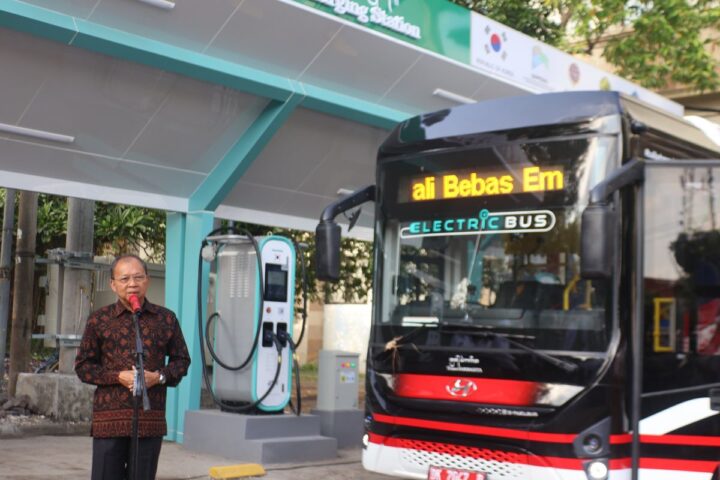
Bali Governor Wayan Koster attends the launch ceremony for the Trans Sarbagita electric bus trial at Ngurah Rai Sports Complex in Denpasar on November 9, 2026. (Photo: Bali Provincial Government)
DENPASAR, Bali — Bali has officially launched its electric public bus service, allowing residents and tourists to travel between Denpasar and the Garuda Wisnu Kencana (GWK) cultural park in South Bali free of charge for one year.
The Trans Sarbagita electric buses began operating on Monday, November 9, with Bali Governor Wayan Koster inaugurating the service at the Ngurah Rai Sports Complex in Denpasar.
The provincial government has prepared 11 electric buses for the route, with 10 operating daily and one kept as a reserve.
Koster announced that passengers would not be charged for at least one year, extending the free-travel period beyond the initial trial arrangement that had been expected to end in December 2026.
The cost of operating the buses during the free-service period will be covered by Bali’s provincial budget.
Where Do the Electric Buses Go?
The buses operate along Trans Sarbagita’s Corridor I, connecting the Ngurah Rai Sports Complex in Denpasar with GWK in Badung regency.
From Denpasar, the route passes through Renon, Jalan Raya Puputan, Jalan Sudirman and Sesetan before continuing toward Jimbaran, the Udayana University campus area and GWK.
The return journey follows a modified route through Jimbaran and Denpasar, including parts of Renon.
According to local transportation officials, the service has 46 designated stops in the direction of GWK and 41 on the return journey.
The route provides another public transport option for commuters, students and visitors travelling between central Denpasar and southern Bali.
Free Rides Still Require an E-Money Card
Although passengers do not have to pay a fare, they must still tap an electronic payment card when boarding.
Bali Transportation Agency head I Kadek Mudarta said the card system would be used to record passenger numbers and evaluate demand during the initial operating period.
Passengers without an e-money card can use a card provided by staff aboard the bus, allowing them to access the free service.
The buses are operated by state-owned transport company DAMRI under the supervision of the Bali Transportation Agency.
Part of Bali’s Electric Transport Push
The 11 buses and six fast-charging facilities were provided through the Bali E-Mobility project, supported by the South Korean government in cooperation with Indonesian authorities and the Global Green Growth Institute.
The fleet was formally handed over in October before entering passenger service in November.
Koster described the electric bus program as part of Bali’s efforts to reduce transport emissions, noise pollution and dependence on fossil fuels.
He promoted the service using three goals: zero tailpipe emissions, quieter operation and zero fares for passengers.
The electric buses produce no exhaust emissions while driving, although their overall environmental impact also depends on how the electricity used to charge them is generated.
The new service is intended to encourage more people to use public transport rather than relying exclusively on private motorcycles and cars.
For now, passengers can travel on the Denpasar–GWK corridor without paying a fare, while authorities monitor ridership and assess the longer-term operation of the service.