- Indonesia’s Leading English News Website, Direct Daily from the Island of Bali.


Sade Fire Destroys Homes, Ancient Sasak Manuscripts in Lombok
Sade Fire Destroys Homes, Ancient Sasak Manuscripts in Lombok
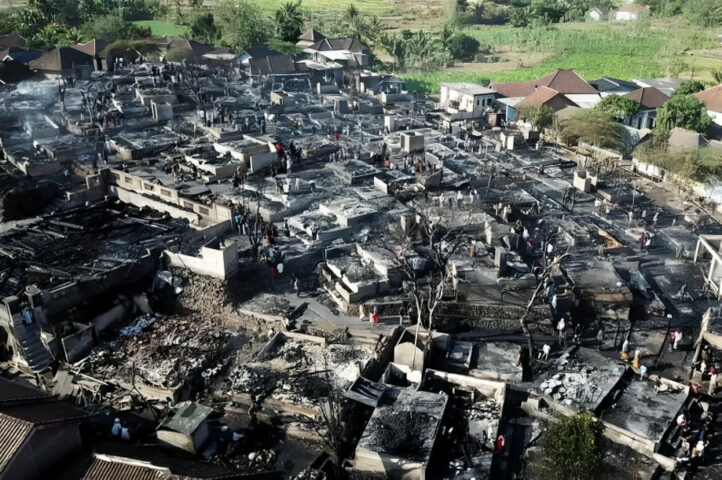
Sade Traditional Village after a devastating fire in Central Lombok, West Nusa Tenggara.
LOMBOK, West Nusa Tenggara — A fire that tore through Sade Traditional Village in Central Lombok has destroyed dozens of traditional homes and craft shops, while also consuming parts of the Sasak community’s cultural heritage, including ancient manuscripts.
The fire broke out on Saturday night, Aug. 22, in the historic village of Rembitan, Central Lombok, West Nusa Tenggara. The latest government assessment found that 167 buildings were affected, including 75 traditional houses, 69 handicraft shops and eight thatched granaries. A mosque, traditional gathering spaces, a village gate and other public facilities were also damaged.
Around 320 people from 120 families were displaced by the fire, according to the West Nusa Tenggara Disaster Mitigation Agency. A provincial task force has since been established to coordinate the recovery and restoration of the village.
But the damage goes beyond buildings.
The blaze destroyed a number of cultural artefacts belonging to the Sasak community, including traditional weapons, ceremonial drums, gongs, traditional performance equipment and ancient manuscripts. The Culture Ministry said teams are now searching the ruins for surviving artefacts and fragments that may still be preserved.
Residents also reported the loss of the Rengganis and Jejawan lontar manuscripts, which were traditionally used during weddings and other customary ceremonies. Some of the damaged manuscripts can no longer be fully read or recovered.
Sade is one of Lombok’s best-known traditional villages and an important cultural tourism destination. The settlement is home to the Sasak community and is known for its distinctive traditional houses, weaving and long-preserved customs.
The traditional construction of Sade also made the village particularly vulnerable to fire. Many of its buildings use wood, bamboo and thatch — materials that are central to its architectural identity but can allow flames to spread quickly.
The government is now facing a difficult task: rebuilding Sade without turning it into something that no longer resembles the cultural village that existed before the fire.
The Culture Ministry has outlined a four-phase recovery plan covering emergency response, cultural inventory, physical restoration and long-term preservation. Reconstruction is expected to use traditional materials while incorporating modern fire-prevention systems. The government also plans to digitise cultural documents and strengthen community-based disaster preparedness.
Officials are also working to document surviving stories, traditions and traditional knowledge from community elders, while cultural artefacts are being inventoried with the help of local authorities and customary leaders.
For residents whose livelihoods depended on weaving and tourism, recovery will also mean rebuilding their ability to earn a living. The government has said it will provide affected residents with new looms and weaving equipment.
The cause of the fire has not yet been established. Police and the Bali Regional Police Forensic Laboratory conducted a crime-scene investigation on Monday, Aug. 24, to determine how the blaze started.
As Sade begins the long process of rebuilding, the challenge is not simply to replace what was burned. It is to preserve what made the village culturally significant in the first place.