- Indonesia’s Leading English News Website, Direct Daily from the Island of Bali.


Bali tourists warned after Aussie girl’s henna tattoo nightmare: ‘My daughter’s scarred’
Bali tourists warned after Aussie girl’s henna tattoo nightmare: ‘My daughter’s scarred’
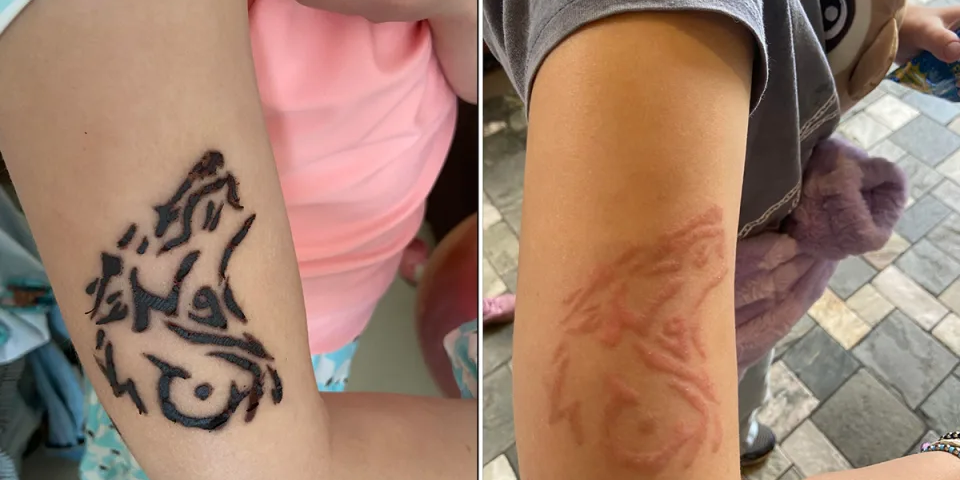
A nine-year-old Aussie girl's henna tattoo left a scar that meant frequent doctor's visits and medication since she returned from Bali. Source: Kaitlyn Salter
“We didn’t think anything of it until two days later,” she shared. “I noticed her arm was all blistered over several parts of the henna tattoo and she said it was aching. I started putting antiseptic cream on it, but the next day it looked worse.”
“There was part of it that was open and oozing, so I started her on antibiotics, antihistamines and kept up the antiseptic cream as well as bought some Betadine, she added It’s been aching and itchy for her ever since.”
Ms Salter says that the henna has since faded away but her daughter is now left with a raised and painful scar that has so far required several doctor’s visits.
‘Gotten worse’
“The first doctor in Bali thought it would clear up, and initially I thought it was looking better for a couple days, but once we arrived back in Melbourne it’s just gotten worse,” she said, explaining that her daughter had just finished a course of antibiotics and has now been prescribed another round of stronger antibiotics on top of burn cream and antihistamines. “Her arm is still not looking great and is hot to touch.”
“She is most upset because it’s not the picture she wanted, and I’m upset because I had no idea these reactions could happen or I would have stopped it,” Ms Salter lamented.
While Imogen is set for another trip to the doctor following this round of antibiotics, Ms Salter and her daughter hope that sharing their family’s experience would help create some awareness over the potential dangers of henna tattoos. “She doesn’t want it to happen to others.”
Bali tourists warned
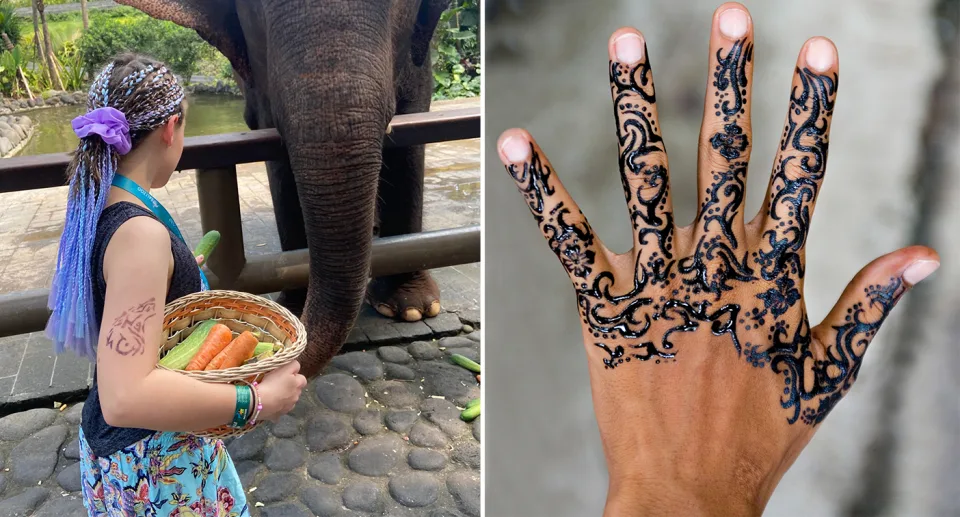
Ms Salter cautioned parents and other tourists who frequent Bali to think twice before getting the exotic tattoo. “When getting henna, just be aware what can happen if you react,” she warned in a Facebook group for Bali tourists alongside photos of the before-and-after effects of the dye on her daughter’s skin.
“I had no idea and now my daughter’s scarred! This is after having to go on antibiotics and vitamin E cream, as well as antiseptic cream when it was blistered. Think twice. Wish I had known this could have happened,” she added.
The post spawned hundreds of comments from Facebook users, some of whom related similar experiences with black henna. “My daughter got two hennas. First was quite red-like and second was black and got what I call chemical burn,” someone shared, while another chimed: “The black is the bad stuff, as is blue or grey. There is no natural black henna no matter how much they say it’s natural.”
Dangers of black henna
Unlike pure, natural henna, which tends to be chocolate brown or mahogany in colour – black henna is adulterated with paraphenylenediamine (PPD) – a chemical substance that is widely used as permanent hair dye. As many as one in five people are allergic to PPD, but it tends to be used due to its accessibility and lower cost.
Source: news.yahoo.com