- Indonesia’s Leading English News Website, Direct Daily from the Island of Bali.


Bali, Australia Strengthen Efforts to Promote Respectful Tourism
Bali, Australia Strengthen Efforts to Promote Respectful Tourism
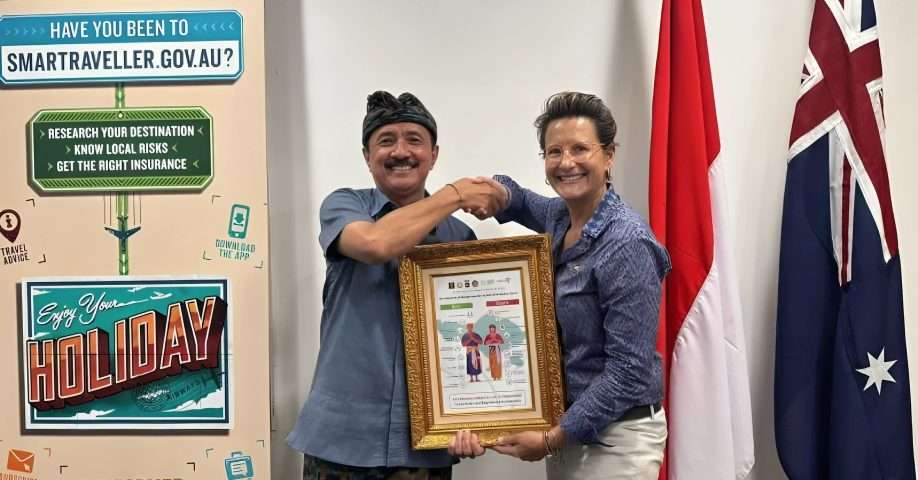
Head of the Bali Provincial Tourism Office, Tjokorda Bagus Pemayun (left), with Australian Consul General Jo Stevens in Denpasar, Bali, on Thursday.
DENPASAR – The Bali provincial government and the Australian Consulate General are working together to encourage foreign travelers, particularly Australians, to adhere to local regulations and respect Balinese culture.
“I am pleased to know that the Australian Consulate General in Bali is supportive of our efforts to encourage respectful tourist behavior,” said Bali Provincial Tourism Office Head, Tjokorda Bagus Pemayun, on Thursday.
Pemayun emphasized that Bali remains a top destination for Australian travelers and urged all international visitors to follow the province’s cultural norms and environmental protections. The Bali government has issued official guidelines outlining the dos and don’ts for foreign tourists, which Australian Consul General Jo Stevens fully supports.
“The guidelines are useful for foreign tourists. I encourage all Australians to respect Bali’s unique culture and follow the dos and don’ts for a safe and enjoyable visit,” Stevens said.
According to her, 1.5 million Australian tourists visited Bali in 2024, with only a small fraction requiring consular assistance.
“This shows that the vast majority of Australians enjoy a pleasant, safe, and trouble-free holiday in Bali while supporting the local culture and economy, a trend we want to see continue,” she noted.
The Australian Consulate General is actively collaborating with the Bali government to promote respectful tourism through social media campaigns and travel advisories via Smartraveller, Australia’s official travel guidance platform. The advisories include Bali’s dos and don’ts, as well as reminders that violating local laws and customs can lead to criminal penalties or deportation.
Statistics Indonesia (BPS) in Bali reported that foreign tourist arrivals reached 6.33 million in 2024, marking a 20.1% increase from 5.27 million in 2023. Australia ranked as the top source of international visitors, followed by India (550,379) and South Korea (294,024).