- Indonesia’s Leading English News Website, Direct Daily from the Island of Bali.


River Turns Pink in Karangasem, Police Investigate
River Turns Pink in Karangasem, Police Investigate
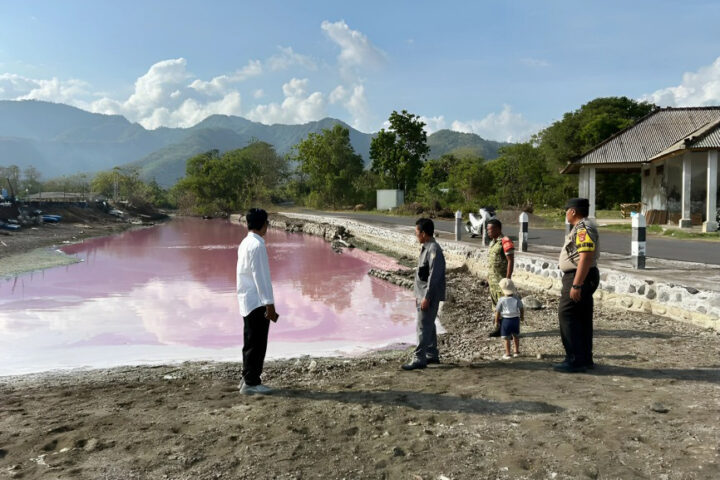
Police officers and local officials inspect a section of the Bebayu River that has turned pink in Karangasem, Bali. (Photo: Karangasem Police Public Relations)
KARANGASEM, Bali — A river near Bali’s eastern coastline has turned a striking shade of pink, alarming local residents and prompting a police investigation into possible pollution linked to wastewater discharged from a nearby shrimp farm.
The unusual discoloration was reported in the Bebayu area of Laba Sari village, Abang district, Karangasem Regency, where stagnant water near the coast had turned bright pink and developed a strong, unpleasant smell.
Images and videos of the phenomenon circulated on social media, drawing attention to the condition of the waterway, which flows towards the sea near Bebayu Beach.
Karangasem Police spokesperson I Nengah Artono confirmed the incident on Monday, November 16, saying officers were investigating what had caused the dramatic change in color.
Shrimp Farm Wastewater Under Investigation
Police found that a shrimp farm located beside the waterway had completed its harvest in late October, approximately two weeks before the discoloration was reported.
According to preliminary findings, water remaining in the shrimp ponds had been discharged into the nearby river channel, where it accumulated instead of flowing directly into the sea.
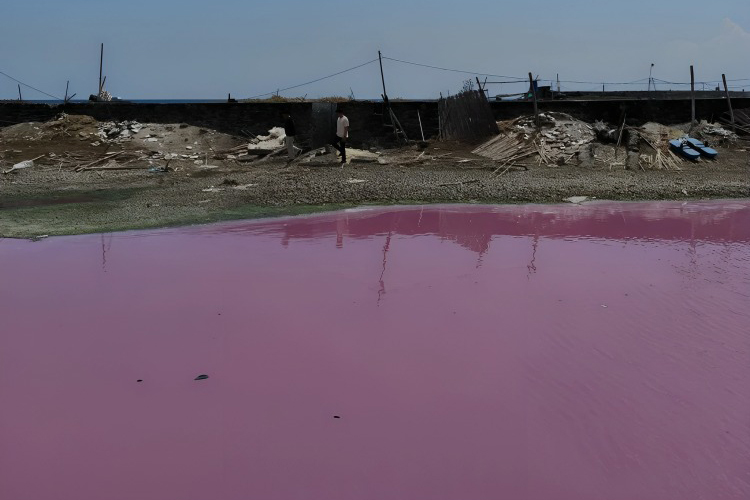
Investigators are examining whether the discharge, combined with hot weather and increased salt concentrations, may have created conditions favorable for microorganisms that can turn water pink or reddish.
One possible explanation involves Dunaliella salina, a microscopic alga capable of producing reddish pigments under certain environmental conditions. Salt-loving microorganisms may also cause similar discoloration.
However, authorities stressed that these remain preliminary theories. There is currently insufficient evidence to determine whether the color change was caused by biological activity, chemical pollution or a combination of factors.
Residents Warned Against Using River Water
The Karangasem Environmental Agency inspected the affected waterway on November 16 and reported a strong odor resembling ammonia and sulfur.
Agency head I Made Wiguna said environmental officers collected water samples from three locations, including two upstream reference points and the affected section of the river.
The samples are undergoing laboratory testing to establish water quality and identify potential contaminants.
Meanwhile, local authorities have advised residents not to use water from the affected river for household activities or irrigation until the results are available.
Police are also examining whether any environmental regulations were breached in the management and discharge of wastewater from businesses operating near the river.
Laboratory results were expected approximately one week after the samples were collected, although no definitive findings had been announced as of November 19.
For now, the cause of the river’s unusual pink color remains unconfirmed, and investigators have not established that the nearby shrimp farm committed an environmental violation.