- Indonesia’s Leading English News Website, Direct Daily from the Island of Bali.


Performers From Several Countries Gather for International Folklore Festival in Ubud
Performers From Several Countries Gather for International Folklore Festival in Ubud
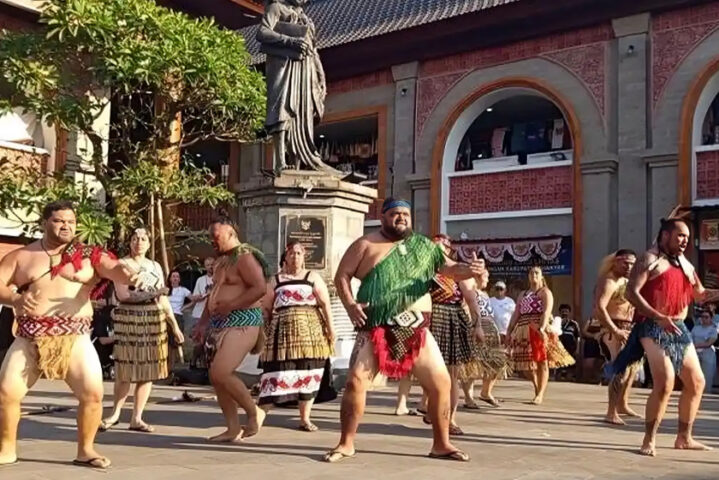
The Nusantara International Folklore Festival (NIFF) 2026 takes place in Ubud, Bali, on Sept. 26–27, bringing together more than 250 participants from Indonesia and four other countries.
UBUD, Bali — More than 250 performers from five countries are gathering in Ubud this weekend for the Nusantara International Folklore Festival (NIFF) 2026, bringing traditional dance, music and cultural performances from Indonesia and abroad to Bali.
The two-day festival, held at Museum Puri Lukisan on Sept. 26–27, features performers from Indonesia, Japan, New Zealand, Poland and Thailand under the theme “Global Rhythms, Shared Stories.”
One of the opening-day highlights was a Kapa Haka performance by New Zealand’s Wairea Performing Arts, showcasing M?ori dance, movement and traditional songs.
Gilly, a visitor from South Africa, said the performances offered audiences in Ubud an opportunity to experience cultures from different parts of the world.
“I was amazed. Having a cultural performance in the middle of a busy area allows us to discover the cultures being presented. It’s brilliant,” Gilly said.
Poland’s Nadarzyn Orchestra also brought a different form of traditional performance to the festival, appearing with an ensemble of percussion and wind instruments.
NIFF Artistic Director and Co-Founder Maria Darmaningsih said the Polish group demonstrated how folklore can take different forms across countries.
“In Poland, this kind of drum band is actually part of folk culture,” Maria said. “They come to NIFF not only to perform, but also to convey messages through percussion and wind instruments.”
Indonesian participants come from Bali, Jakarta, Yogyakarta, Indramayu, Dharmasraya, Palangka Raya and Dompu, presenting traditions from different parts of the archipelago.
Festival Director and Co-Founder Sita Tyasutami said interest in this year’s event had grown significantly, with organizers receiving numerous inquiries from prospective performers, volunteers and workshop participants.
“The number of participants is higher than last year, and they come from a wider range of countries,” Sita said.
Participants are selected through a curatorial process requiring videos, photographs, biographies and information about their artistic groups.
NIFF curator Jasmine Okubo said folklore should not be viewed simply as a tradition preserved unchanged from the past.
“Folklore is part of culture that continues to develop along with the people who practice it,” she said.
NIFF traces its roots to the Jakarta International Folklore Festival, first held in 2019 before being interrupted by the COVID-19 pandemic. The festival was later revived in Ubud under the NIFF name, with its first Bali edition held in 2025.
Sunday’s program includes Reog Ponorogo, performances by Thailand’s Sirisook Dance Theatre and Japan’s Kimiko Wakayagi, M?ori performances by Wairea Performing Arts and music from Poland’s Nadarzyn Orchestra.
The festival is scheduled to conclude Sunday with a Kecak collaboration featuring Balinese artist and scholar I Wayan Dibia and a closing performance by KunoKini.