- Indonesia’s Leading English News Website, Direct Daily from the Island of Bali.


Preserving Nyoman and Ketut for Bali’s Next Generation
Preserving Nyoman and Ketut for Bali’s Next Generation
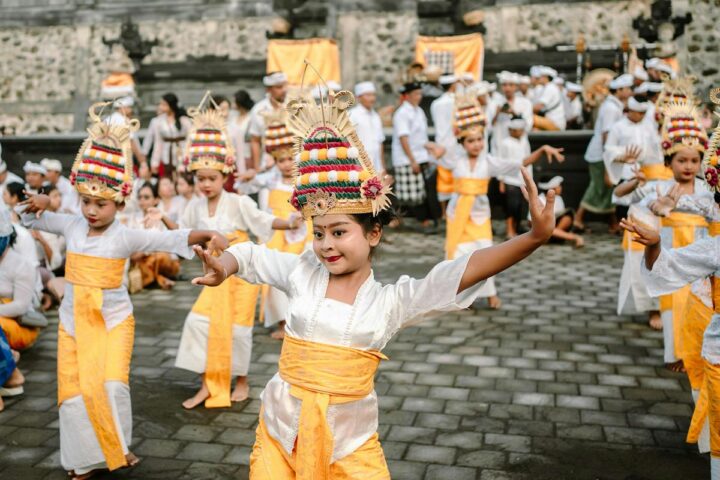
Balinese children take part in a traditional ceremony as the island seeks to preserve cultural traditions for future generations. (Photo: Eyestetix Studio/Unsplash)
In Bali, a person’s name can often tell a story before they even introduce themselves.
Wayan or Putu is traditionally associated with the first-born child. Made or Kadek with the second. Nyoman or Komang with the third. And Ketut with the fourth.
But as Balinese families become smaller, the later names in that sequence — particularly Nyoman, Komang and Ketut — are becoming less common.
The Bali provincial government is now preparing incentives for third and fourth children, initially prioritizing those from lower-income families, as part of an effort to address demographic change while maintaining a distinctive element of Balinese cultural tradition.
Funding for the program has been included in Bali’s revised 2026 regional budget, with support planned across education, health and social welfare.
Bali Governor Wayan Koster has linked the initiative to concerns about generational continuity as family structures change. He has previously said people named Nyoman account for about 19 percent of the population, while Ketut accounts for around 6 percent, citing the figures as an indication that fewer Balinese families are having third and fourth children.
More Than Preserving a Name
Bali’s traditional birth-order naming system remains one of the island’s most recognizable cultural characteristics.
The government initiative, however, is not simply about paying parents to give their children particular names.
It is intended to support third and fourth children in Balinese families, who would traditionally be given names such as Nyoman or Komang for the third child and Ketut for the fourth.
Lower-income families are expected to receive priority during the initial implementation, while assistance is being developed across education, healthcare and social welfare.
Koster has previously outlined support that could begin during pregnancy, including nutritional assistance for mothers and children, as well as educational support.
The stated aim is to ease some of the financial considerations associated with raising a third or fourth child while addressing the government’s concerns about demographic and cultural continuity.
As Balinese Families Become Smaller
Behind the initiative is a broader demographic issue.
The provincial government has said Bali’s local population growth requires attention as family patterns change and fewer households have three or four children.
The consequences, in the government’s view, extend beyond the declining prevalence of traditional birth-order names.
Fewer third and fourth children also mean a smaller pool within future generations to participate in and carry forward Bali’s social, customary and cultural traditions.
In that sense, the declining presence of Nyoman and Ketut has become a visible symbol of a wider demographic shift.
Preserving Tradition Amid Change
The initiative comes as Bali continues to undergo significant social and economic change.
For families themselves, decisions about how many children to have involve considerations that extend well beyond tradition. The cost of living, education, healthcare, employment and household finances can all influence family planning decisions.
The provincial government is seeking to address some of those economic considerations through incentives and assistance for families with third and fourth children.
The program does not require Balinese families to have four children, and decisions over family size remain with individual families.
For the government, however, the declining prevalence of Nyoman and Ketut represents more than a change in naming patterns. It reflects a shift in the family structure from which those names have traditionally emerged.
On an island where a name can reveal a person’s place within a family, the future of Nyoman and Ketut is therefore closely tied to the future shape of Balinese families themselves.
Whether incentives will influence those deeply personal decisions remains to be seen. But the initiative highlights a question Bali is increasingly confronting: how to carry distinctive cultural traditions into the next generation as the society around them continues to change.