- Indonesia’s Leading English News Website, Direct Daily from the Island of Bali.


Bali to Require Solar Panels in Five Tourism Zones
Bali to Require Solar Panels in Five Tourism Zones
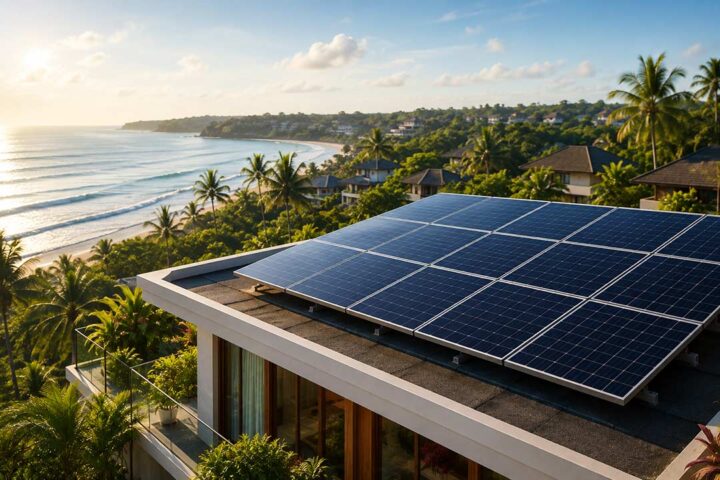
Illustration of solar panels installed.
DENPASAR, Bali – Hotels, restaurants, villas, office buildings and homes in five of Bali’s key tourism areas are set to be required to install rooftop solar panels as the province moves to develop low-emission tourism zones and strengthen its energy security.
The areas cover Nusa Dua and Kuta in Badung Regency, Ubud in Gianyar Regency, Sanur in Denpasar and the Nusa Penida Islands in Klungkung Regency.
The initiative forms part of Bali’s broader push for greener and more sustainable tourism, with the provincial government focusing on clean energy, electric mobility, environmental conservation, waste reduction and community participation.
Speaking at a coordination meeting on preparations for the low-emission zones on Wednesday (August 5), Governor Wayan Koster said Bali had already introduced measures including restrictions on single-use plastics, the promotion of electric vehicles and the use of solar power, but that these efforts needed to be accelerated.
Koster also linked the move to the island’s need for greater energy security.
Bali remains dependent on electricity transmitted from Java through undersea cables. Koster warned that damage to the cables caused by natural factors or other incidents could disrupt electricity supplies to the island.
He urged businesses and other electricity users to increase their use of solar power as Bali works toward greater energy independence.
Electricity demand is also expected to continue rising. Koster said electricity demand in Bali this year was already above 1,200 megawatts, while the system had capacity of more than 1,400 MW.
He said demand was expected to rise to more than 1,400 MW in 2027, warning that if preparations were not made in advance, Bali could face rolling electricity outages.
Koster said such a situation could not be allowed to affect major tourism areas in Badung, Denpasar and Gianyar.
The planned low-emission zones will be developed around five main pillars: green energy, green mobility, green ecosystems, green tourism and green communities.
Green energy will include rooftop solar installations for hotels, restaurants, villas, offices and homes. Green mobility will focus on battery-powered electric vehicles, while the ecosystem pillar will include efforts to increase vegetation cover and protect forests.
The green tourism component will include efforts to reduce single-use plastic waste, while the green community pillar will emphasise local wisdom and community participation.
Koster instructed the Bali Provincial Research and Innovation Agency (BRIDA), together with relevant agencies and the governor’s expert team, to further map the low-emission zones and determine which areas and buildings will be covered by the programme.
The proposed implementation will also involve the licensing authorities, with rooftop solar installations expected to become part of the requirements for buildings within the designated areas.
The move is intended to support Bali’s transition toward cleaner energy while reducing the island’s vulnerability to disruptions in its electricity supply.