- Indonesia’s Leading English News Website, Direct Daily from the Island of Bali.


Why Is ABC Australia Talking About Bali’s Waste Crisis?
Why Is ABC Australia Talking About Bali’s Waste Crisis?
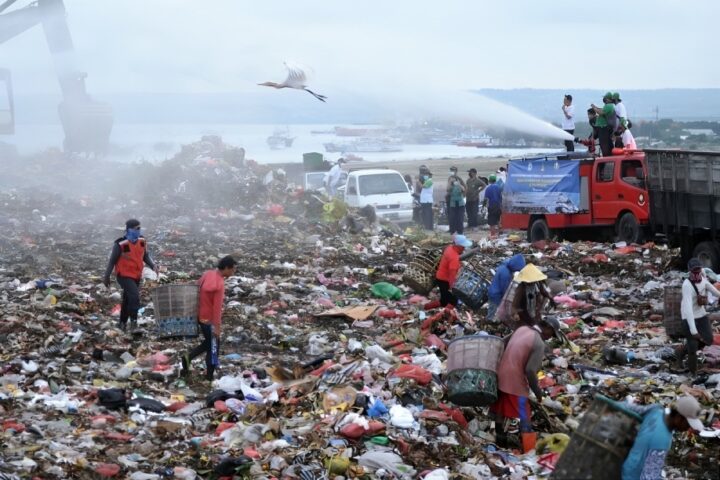
Scavengers work among piles of waste at Bali's Suwung Regional Landfill in Denpasar, Bali.
BALI – Australian broadcaster ABC has put Bali’s growing waste management challenges back in the spotlight with a recent report examining illegal dumping, mounting rubbish piles and the island’s ongoing transition away from open dumping at the Suwung Regional Landfill.
The report focuses on an illegal dumping site in Buduk Village, just north of the popular tourist destination of Canggu, where residents admitted disposing of household waste for months despite the area not being designated as an official landfill.
According to ABC, the Buduk site reflects broader challenges facing Bali as authorities overhaul the island’s waste management system in an effort to reduce reliance on landfills and introduce more sustainable waste treatment.
The report says the Buduk site is not an isolated case. Large piles of rubbish have also been found in several parts of Bali, including Denpasar, highlighting growing pressure on the island’s waste management system amid rapid population growth and increasing tourist arrivals.
The situation comes as Bali gradually phases out environmentally harmful open dumping practices at the Suwung Regional Landfill. Rather than closing the facility entirely, authorities have been introducing stricter waste management measures, encouraging waste segregation and expanding local waste processing to reduce dependence on landfill disposal.
However, the transition has also exposed gaps in waste infrastructure across several regencies, with some communities struggling to process waste locally. As a result, illegal dumping and rubbish accumulation have been reported in a number of locations across the island.
Denpasar Environmental Agency head Ida Bagus Putra Wirabawa said authorities continue to strengthen enforcement against illegal dumping.
“Violations still occur, but from day to day they are declining. We actively conduct inspections at locations where illegal dumping frequently occurs and have installed CCTV cameras to discourage repeat violations,” he said.
Environmental experts, however, say Bali remains in a challenging transition period.
Urban biologist Buya Azmedia Istiqlal described the current situation as a waste management crisis, saying many residents have resorted to burning waste or disposing of it illegally because they are uncertain where it should take their rubbish.
“People are burning waste, leaving it by the roadside, throwing it into rivers and ravines. None of this is good for Bali’s environment,” he said.
Gary Bencheghib, co-founder of environmental organisation Sungai Watch, said the recent policy changes have created confusion among residents.
“A lot of people genuinely don’t know where they can dispose of their waste,” he said.
Despite the challenges, Bencheghib believes the current situation has also encouraged greater public awareness about waste management.
“More than ever, people are talking about waste, sorting rubbish and looking for better solutions. That’s an important step forward.”
Bali generates around 3,500 tonnes of waste every day, with approximately 65 percent consisting of organic waste and 15 percent plastic, according to figures cited in the report.
The island’s booming tourism industry has added further pressure to the waste management system. Last year, Bali welcomed nearly seven million international visitors, alongside around nine million domestic tourists, with visitors generally producing significantly more waste than local residents.
Bencheghib noted that Bali’s traditional waste disposal practices were shaped during a time when most household products were biodegradable.
“In the 1970s and 1980s, almost everything was organic and wrapped in banana leaves,” he said. “People could dispose of it behind their homes, where it naturally decomposed.”
The widespread use of plastic packaging has fundamentally changed that reality, while public awareness of plastic pollution has struggled to keep pace.
Although the transition has created short-term challenges, Bali’s move away from open dumping forms part of a broader effort by provincial and national authorities to modernise the island’s waste management system through waste segregation, recycling and alternative treatment facilities.
For many residents, the transition has not been without disruption. But environmental groups say the growing public discussion sparked by the issue could help accelerate long-term reforms and build a cleaner, more sustainable future for the island.