- Indonesia’s Leading English News Website, Direct Daily from the Island of Bali.


The Unique of ‘Baris Juntal’ Dance
The Unique of ‘Baris Juntal’ Dance
BANGLI
‘Baris Juntal’ dance is the name of a type of dance that exist in Bangli regency. The dance which has existed since the 1930s is still preserved well by the people in Banjar Dinas Malet Kuta Mesir, Tiga Village, Susut District. The unique thing that distinguishes the dance with other types of Baris dance is the clothing worn by the dancers. In general ‘Baris’ dancers dressed in coils on the head, but for ‘Baris Juntal’ the dancers wear ancient style of the hat.
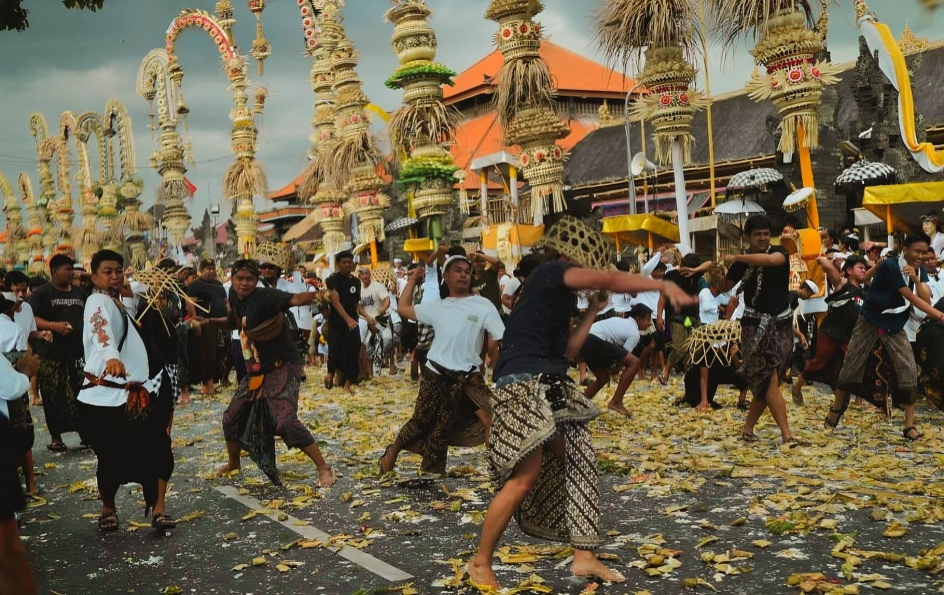
In the dance performances of Baris Juntal in the Field of Captain Mudita recently, the outfit looks quite unique and different. Dancers are all male wearing trouser suit with short-sleeved black t-shirt. On the neck of dancers wrapped a woven shawl of Balinese. As the head cover, the dancers round hat in colonial style. Makeup of the dancers is very simple, just use chalk and charcoal. In the ear there is ‘gegirang’ leaf as accessories. Meanwhile, the weapon is spears with a length of approximately 1 meter and Tamiang.
Kelian Banjar Malet Kuta Mesir Nyoman Rastika during interview explained, dance movements are not much different from the general ‘Baris’ dance that is usually performed by one sekaa (group) which consists of eight dancers. Usually this dance is performed by dancers who are already mature. “The movement is similar to the other ‘Baris’ dance movements. This dance depicts the battle. They attack and being attacked, “he explained.
In the performance, the dance is accompanied by complete musical instrument (gamelan). Rastika said, as the stories told by elders in Banjar Dinas Malet Kuta Mesir, baris juntal has been been existing since the Dutch colonial era around the 1930s. The Dutch colonial period from the time that is supposedly causing the combination of the dancer outfit.
Although the outfit is unique, but the dance is including to sacred dances. This dance is usually performed to accompany religious ceremonies. Even the hats worn by the dancers are usually stored in a local temple after staging.